TCP / IP is a data communication protocol model gives a very large change in the world of communications and computers. TCP / IP protocol is to provide an internationally recognized standard and is used as a reference in the development of the computer world, especially on computer networks. Where this protocol can provide flexibility in communication between one computer with other computers in a network even if the computer uses a different operating system platforms. TCP / IP has five layers. Unlike the OSI model has seven layers. The layers include Physical Layer, Network Access Layer, the Internet Layer, Transport Layer and Application Layer. The fifth layer has the functions and responsibilities of each as well as the existing layer in the OSI model.Chapter 1. Introduction Background In the process of data communication between computers over the Internet requires a protocol, which is a collection of rules that govern the process of communication between electronic devices, one of which TCP / IP (transmission known as Internet protocol). TCP / IP is a protocol suite that is used to send data between computers in a network without the limitations of hardware and software. This protocol can be used as a means of sending data or control information via computer networks. Internet protocol (IP), User datagram protocol (UDP) and Transmission Control Protocol (TCP) is the basis for network-based communication. TCP / IP originated from the 2 protocols, ie TCP and IP. Communication TCP / IP provides a simple interface, although actually very complex. The use of function TCP / IP contained in the palette Function, Communication, TCP.
the workings of TCP / IP
TCP / IP is a data communication protocol model gives a very large change in the world of communications and computers. TCP / IP protocol is to provide an internationally recognized standard and is used as a reference in the development of the computer world, especially on computer networks. Where this protocol can provide flexibility in communication between one computer with other computers in a network even if the computer uses a different operating system platforms. TCP / IP has five layers. Unlike the OSI model has seven layers. The layers include Physical Layer, Network Access Layer, the Internet Layer, Transport Layer and Application Layer. The fifth layer has the functions and responsibilities of each as well as the existing layer in the OSI model.Chapter 1. Introduction Background In the process of data communication between computers over the Internet requires a protocol, which is a collection of rules that govern the process of communication between electronic devices, one of which TCP / IP (transmission known as Internet protocol). TCP / IP is a protocol suite that is used to send data between computers in a network without the limitations of hardware and software. This protocol can be used as a means of sending data or control information via computer networks. Internet protocol (IP), User datagram protocol (UDP) and Transmission Control Protocol (TCP) is the basis for network-based communication. TCP / IP originated from the 2 protocols, ie TCP and IP. Communication TCP / IP provides a simple interface, although actually very complex. The use of function TCP / IP contained in the palette Function, Communication, TCP.
Connecting TOOLS AND MEASURE OPTIC
Grafting tools (Fusion Splicer) and measuring tools Fiber Optics (OTDR) is one of the supporting devices in the operational management of the access network Fiber Optics
For the purposes of Operations and Maintenance (O & M) Network Element that operates using a network acccess Fiber Optics, it is a very important role connecting tools and measuring instruments Fiber Optics.
Optical Fiber Access Network as a transport medium for broadband and narrowband services are often susceptible to interference, which formed as a fiber optic cable rupture resulting in Transportation End (Perpu) on the supply terminal equipment and data ports. So to help trouble shooting on Fiber Optic network access control can be done immediately, either in the form of search (searching) the location of cable break penyambunganm Fibre Optic Cable.
Link Tools Fiber Optics (Fusion Splicer)

Fiber Optic Instrument connection known as FUSION SPLICER is a device used to connect fiber optic core that implements the glass-based electrical power that has been transformed into a media-shaped laser beam that heats the glass breaking work on the core that connect back to the good. This splicer grafting tool must have high accuracy so that at the time of grafting (splicing) could be close to perfect, because the process of welding glass media occurs glass melting process that produces a medium which is connected in one piece without a gap because it has a media character who has the same compound. The connection may not be intact, because it does not follow the correct procedure of grafting. When this happens the switching process must be repeated again, until close to the smallest damping distinguished kesilnya (below 0.2 dB) Splicing by welding by means of connection must follow the rules and strict hygiene should be adhered to by a technician because in the event of violations deliberate to facilitate the process of joining it will result in the work is not perfect because it will generate a value of grafting tool that shows Bit Error Rate (BER) is high when applied will lead to forced transmission path to the device will not perfect because it has a resistance.
Completeness:

This results from grafting fiber opticnya:


For the purposes of Operations and Maintenance (O & M) Network Element that operates using a network acccess Fiber Optics, it is a very important role connecting tools and measuring instruments Fiber Optics.
Optical Fiber Access Network as a transport medium for broadband and narrowband services are often susceptible to interference, which formed as a fiber optic cable rupture resulting in Transportation End (Perpu) on the supply terminal equipment and data ports. So to help trouble shooting on Fiber Optic network access control can be done immediately, either in the form of search (searching) the location of cable break penyambunganm Fibre Optic Cable.
Link Tools Fiber Optics (Fusion Splicer)
Fiber Optic Instrument connection known as FUSION SPLICER is a device used to connect fiber optic core that implements the glass-based electrical power that has been transformed into a media-shaped laser beam that heats the glass breaking work on the core that connect back to the good. This splicer grafting tool must have high accuracy so that at the time of grafting (splicing) could be close to perfect, because the process of welding glass media occurs glass melting process that produces a medium which is connected in one piece without a gap because it has a media character who has the same compound. The connection may not be intact, because it does not follow the correct procedure of grafting. When this happens the switching process must be repeated again, until close to the smallest damping distinguished kesilnya (below 0.2 dB) Splicing by welding by means of connection must follow the rules and strict hygiene should be adhered to by a technician because in the event of violations deliberate to facilitate the process of joining it will result in the work is not perfect because it will generate a value of grafting tool that shows Bit Error Rate (BER) is high when applied will lead to forced transmission path to the device will not perfect because it has a resistance.
Completeness:
This results from grafting fiber opticnya:

Once connected, closed this same name joint closure
Fiber Optical measuring instruments (OTDR)
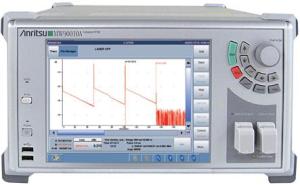
The main tool or the main tools that are needed in carrying out the trouble shooting for problems that occur on the network access without the use of Fibre Optics for Optical Fiber gauge can not do anything against the disturbance.
Fiber Optics measuring tool called the name of the OTDR (Optical Transmission Digital Reflektometer) is a tool to detect the continuity of a fiber optic cable within a certain distance so that it can generate the distance from the two sides which is the size of the disturbance so that trouble shooting can be performed well because it will easily determine the position of the location of the disturbance with reference to the measured distance from the OTDR measurement device.
Dalama implementation of Operation & Maintenance of Fiber Optic network access should be absolutely available tools to determine and carry out trouble shooting in the disturbance at the Optical Fibre access network so that problems can be dealt with as soon as possible to the time not too long.
And to follow up the results of trouble shooting it should be prepared the second tool is an implementation of implementation of the settlement gangguna happens by using a tool called Splicer connection with a complete accessories kit including tools that support the implementation of response time interference will be suppressed as soon as possible.
Fiber Optics measuring tool called the name of the OTDR (Optical Transmission Digital Reflektometer) is a tool to detect the continuity of a fiber optic cable within a certain distance so that it can generate the distance from the two sides which is the size of the disturbance so that trouble shooting can be performed well because it will easily determine the position of the location of the disturbance with reference to the measured distance from the OTDR measurement device.
Dalama implementation of Operation & Maintenance of Fiber Optic network access should be absolutely available tools to determine and carry out trouble shooting in the disturbance at the Optical Fibre access network so that problems can be dealt with as soon as possible to the time not too long.
And to follow up the results of trouble shooting it should be prepared the second tool is an implementation of implementation of the settlement gangguna happens by using a tool called Splicer connection with a complete accessories kit including tools that support the implementation of response time interference will be suppressed as soon as possible.
Disorders and Troubleshooting Fiber Optic
At installation time this happens a few problems, when the connection check connection was not fully running smoothly, and generated a very big loss or did not meet the standards recommended loss of RX sensitivity was between - 22 s / d - 24 dB, at time of the calculation turns out that dihasikan loss is - 38 dB, after the team to start troubleshooting this problem from the cable construction is there any bending or a broken cable, use proper attenuator, after some action it was apparent that the resulting loss was still large. Installation team had to replace or to re-splice the patch cord, because it is assumed the splicingnya less than the maximum, it turns out that action also does not alter the loss calculation results are recommended.
After re-checking team in the OTB was the source of the problem is found that FC connectors that enter one of the ports in the OTB is not plugged properly, the inner of the connector was not entered correctly. This is what was causing the resulting loss is not in accordance with the recommendation.
Of problems during installation this time a few conclusions can be drawn that the same thing does not happen again, to minimize the occurrence of these problems, the team concluded how many of these would include:
Make sure the fiber cable used in clean and not broken or damaged.
At the time of loss resulting splicing ensure minimum.
Or reach the recommended RX sensitivity of -22 s / d
- 24 dB.
At the time of entering into one port connector on the OTB confirm his inner entrance precisely. (If this is not well studied it at the time of measurement with power meter, then the loss generated will be large).
At the time of measurement with power meter make sure to use the same wavelength.
If there is a problem, then check some information under this configuration are:
Failure of ONU to range
Dirty Fiber
Signal degradation
Fiber cable is too long
Damaged fiber cable
Bad connections / fiber plant components
Laser / receiver is not working ONU ID # conflict
Permanent loss of frame / pattern in the TDM
Configuring the wrong cable
Ports / Channels / Board is not active
Unable to telnet to the SCC management port (in OLT) Incorrect configuration of IP parameters SCC. No IP traffic
VLAN membership is wrong
After re-checking team in the OTB was the source of the problem is found that FC connectors that enter one of the ports in the OTB is not plugged properly, the inner of the connector was not entered correctly. This is what was causing the resulting loss is not in accordance with the recommendation.
Of problems during installation this time a few conclusions can be drawn that the same thing does not happen again, to minimize the occurrence of these problems, the team concluded how many of these would include:
Make sure the fiber cable used in clean and not broken or damaged.
At the time of loss resulting splicing ensure minimum.
Or reach the recommended RX sensitivity of -22 s / d
- 24 dB.
At the time of entering into one port connector on the OTB confirm his inner entrance precisely. (If this is not well studied it at the time of measurement with power meter, then the loss generated will be large).
At the time of measurement with power meter make sure to use the same wavelength.
If there is a problem, then check some information under this configuration are:
Failure of ONU to range
Dirty Fiber
Signal degradation
Fiber cable is too long
Damaged fiber cable
Bad connections / fiber plant components
Laser / receiver is not working ONU ID # conflict
Permanent loss of frame / pattern in the TDM
Configuring the wrong cable
Ports / Channels / Board is not active
Unable to telnet to the SCC management port (in OLT) Incorrect configuration of IP parameters SCC. No IP traffic
VLAN membership is wrong
ANALYSIS AND SIMULATION SYSTEM IN OFDM NETWORK BY USING THE SPECIFICATION DOCSIS HFC
The development of interactive services through a network application Hybrid Fiber Coax (HFC) such as telephony, Internet access, and other high speed data services is certainly require a two-way transmission. Between 5-42 MHz bandwidth is allocated for upstream signals. The biggest problem lies in an HFC network upstream frequency spectrum. In the upstream direction is likely to arise that it contains high levels of noise caused by thermal noise, narrowband Ingres (Ingres narrowband), impulse noise (impulse noise) and microreflections which resulted in a multipath coaxial transmission line.
Design modeling physical layer upstream HFC network in the simulation process refers to DOCSIS 2.0 specifications. The design includes the RS coding, interleaver, scrambler and mapping. Then in the second model is a combination of DOCSIS 2.0 with OFDM systems. OFDM model consists of a block P / S, cyclic prefix, IFFT and FFT. While the HFC channel modeling is made by the generation of thermal noise, ingress noise, impulse noise, ingress noise and miroreflections.
OFDM Performance in HFC networks are good enough to compare DOCSIS QPSK modulation, occurs prossesing gain equal to 2-3dB. While in 16QAM modulation OFDM performance is worse, but only to the condition of channel noise ingress. Better throughput in OFDM QPSK modulation, while 16QAM OFDM throughput value for the channel extreme worse, because it never reaches a value of 100%.
Design modeling physical layer upstream HFC network in the simulation process refers to DOCSIS 2.0 specifications. The design includes the RS coding, interleaver, scrambler and mapping. Then in the second model is a combination of DOCSIS 2.0 with OFDM systems. OFDM model consists of a block P / S, cyclic prefix, IFFT and FFT. While the HFC channel modeling is made by the generation of thermal noise, ingress noise, impulse noise, ingress noise and miroreflections.
OFDM Performance in HFC networks are good enough to compare DOCSIS QPSK modulation, occurs prossesing gain equal to 2-3dB. While in 16QAM modulation OFDM performance is worse, but only to the condition of channel noise ingress. Better throughput in OFDM QPSK modulation, while 16QAM OFDM throughput value for the channel extreme worse, because it never reaches a value of 100%.
COMPARISON OF WIMAX AND ADSL
Characteristics DSL
DSL service is a broadband internet access service using the cable that was held to a customer. Thus DSL enabled to add value added cable telephone subscribers and the cable network optimization. Examples of DSL operators who have been held in Indonesia are PT Telkom. The product called SPEEDY.
DSL is intended to serve the needs of customers to access broadband Internet services that are fixed. So with these conditions the customer is assumed to not move and only access from home or the office that had been installed a DSL modem.
Network (configuration) of existing DSL can be seen as attached:
DSL service is a broadband internet access service using the cable that was held to a customer. Thus DSL enabled to add value added cable telephone subscribers and the cable network optimization. Examples of DSL operators who have been held in Indonesia are PT Telkom. The product called SPEEDY.
DSL is intended to serve the needs of customers to access broadband Internet services that are fixed. So with these conditions the customer is assumed to not move and only access from home or the office that had been installed a DSL modem.
Network (configuration) of existing DSL can be seen as attached:
Figure 1. DSL Configuration
With the picture above, the DSL device is divided into two: DSLAM is placed on the center (carrier) and a DSL modem located at a customer site. As it is known that the use of a DSL one of which is to optimize the cable networks are already deployed to customers. The operators eg the utilization of Telkom DSL is very beneficial because the residence utilizing the existing cable network.
However there are several obstacles that must be considered by potential operators DSL as follows:
- The limited distance, based on experience in the field and literature studies it is recommended distance between the customer (the remote DSL modem) with the operator (positions DSLAM) located at about 5 km. The more distant or the longer the cable the better will be the lower data rate that can be given. The following table illustrates the idea (the relationship) between distance and data rate that can be supported.
Table 1. ADSL speed characteristics of the distance (source ZTE)
With the picture above, the DSL device is divided into two: DSLAM is placed on the center (carrier) and a DSL modem located at a customer site. As it is known that the use of a DSL one of which is to optimize the cable networks are already deployed to customers. The operators eg the utilization of Telkom DSL is very beneficial because the residence utilizing the existing cable network.
However there are several obstacles that must be considered by potential operators DSL as follows:
- The limited distance, based on experience in the field and literature studies it is recommended distance between the customer (the remote DSL modem) with the operator (positions DSLAM) located at about 5 km. The more distant or the longer the cable the better will be the lower data rate that can be given. The following table illustrates the idea (the relationship) between distance and data rate that can be supported.
Table 1. ADSL speed characteristics of the distance (source ZTE)
- The quality of cable, cable network Given the long-held (tens of years), it will automatically degrade the quality of the cable network. Thus, the speed of data that can be given will be proportional to its quality. Therefore it is necessary to check the quality of the cable network before intalasi / DSL installation at customer service.
- Effective use of the DSL modem is quite effective if it fulfills several conditions as follows:
· cable has been unfolded to the customer
· Wiring / cable length in accordance with the specifications for a particular channel data rate
· Cables in good condition so it does not require rekondisioning or rejuvenation / replacement
· device used has been compatible
- voice and data traffic, when using DSL then be channeled voice services (circuit base) and data (packet) collectively. Thus customers can use to communicate / internet access while on the phone though. This is possible because the use of different frequency between voice and data lines.
Characteristics WiMAX
Better known as WiMAX 802.16 standard that can transfer data at speeds of about 70MBps within a radius distance of about 30-50 km to provide broadband access to hundreds of customers from the base station. Based on the author's experience, then WiMAX can reach a distance of 32 km.
In general configuration of WiMAX is divided into 3 parts: the subscriber station, base station and the transport site. For subscriber stations located in the customer environment (can be fixed or mobile / portable). While the base station is usually a single location with a network operator (network IP / Internet network or TDM / PSTN). To clarify the intended configuration, then the following picture (Figure 2) is a generic configuration of WiMAX. Gambar 2. Konfigurasi Generik WiMAX
- Open standard, one of the advantages of WiMAX is an open standard. So that both vendors, customers and operators do not have to mess around anymore because it can use any brand (not depending on any one brand.)
- The speed of installation, other advantages, WiMAX is the speed of installation. For customers with outdoor antenna installations take less than an hour. Compare having to hold the network cable and DSL modems
- The problem of regulation, the public seems to be patient to take advantage of WiMAX. This is due to the lack of government regulation, especially concerning the issue of frequency. For the frequency of 3.5 GHz WiMAX is still berbenturran by satellite while the 2.5 GHz frequency interference with microwave and cable TV.
- High speed, WiMAX is able to deliver data speeds up to 75 Mbps with wide spaces that are used by 20 MHz
- Flexible, WiMAX is not only for fixed subscribers as DSL subscribers, but can also to serve nomadic and mobile subscribers.
- Investment, along with the maturity of WiMAX products that promise so many vendors will lower prices WiMAX investment. Even the next stage will be produced embedded WiMAX (united like WiFi on notebook centrino) with notebooks, PDAs and even mobile phones.
- No hanging wires, the other with DSL which requires a cable network, the WiMAX does not depend on the cable infrastructure available. Thus the more flexible use WiMAX to provide broadband access services to the rural areas or locations that are not or difficult when using a wired network.
- Effective use of the DSL modem is quite effective if it fulfills several conditions as follows:
· cable has been unfolded to the customer
· Wiring / cable length in accordance with the specifications for a particular channel data rate
· Cables in good condition so it does not require rekondisioning or rejuvenation / replacement
· device used has been compatible
- voice and data traffic, when using DSL then be channeled voice services (circuit base) and data (packet) collectively. Thus customers can use to communicate / internet access while on the phone though. This is possible because the use of different frequency between voice and data lines.
Characteristics WiMAX
Better known as WiMAX 802.16 standard that can transfer data at speeds of about 70MBps within a radius distance of about 30-50 km to provide broadband access to hundreds of customers from the base station. Based on the author's experience, then WiMAX can reach a distance of 32 km.
In general configuration of WiMAX is divided into 3 parts: the subscriber station, base station and the transport site. For subscriber stations located in the customer environment (can be fixed or mobile / portable). While the base station is usually a single location with a network operator (network IP / Internet network or TDM / PSTN). To clarify the intended configuration, then the following picture (Figure 2) is a generic configuration of WiMAX.
Gambar 2. Konfigurasi Generik WiMAX- Open standard, one of the advantages of WiMAX is an open standard. So that both vendors, customers and operators do not have to mess around anymore because it can use any brand (not depending on any one brand.)
- The speed of installation, other advantages, WiMAX is the speed of installation. For customers with outdoor antenna installations take less than an hour. Compare having to hold the network cable and DSL modems
- The problem of regulation, the public seems to be patient to take advantage of WiMAX. This is due to the lack of government regulation, especially concerning the issue of frequency. For the frequency of 3.5 GHz WiMAX is still berbenturran by satellite while the 2.5 GHz frequency interference with microwave and cable TV.
- High speed, WiMAX is able to deliver data speeds up to 75 Mbps with wide spaces that are used by 20 MHz
- Flexible, WiMAX is not only for fixed subscribers as DSL subscribers, but can also to serve nomadic and mobile subscribers.
- Investment, along with the maturity of WiMAX products that promise so many vendors will lower prices WiMAX investment. Even the next stage will be produced embedded WiMAX (united like WiFi on notebook centrino) with notebooks, PDAs and even mobile phones.
- No hanging wires, the other with DSL which requires a cable network, the WiMAX does not depend on the cable infrastructure available. Thus the more flexible use WiMAX to provide broadband access services to the rural areas or locations that are not or difficult when using a wired network.
Figure 3. Applications WiMAX (Fixed and Portable / Mobile)
Market
When a few years ago whose name was synonymous with telephone service telecommunications (voice). However, in line with developments in technology and customer needs, then it leads to a broadband data service. Even the recent growth of data traffic has increased significantly. Besides supported by the increasingly widespread use of internet, many companies and individuals who perform business processes and transactions online
Market
When a few years ago whose name was synonymous with telephone service telecommunications (voice). However, in line with developments in technology and customer needs, then it leads to a broadband data service. Even the recent growth of data traffic has increased significantly. Besides supported by the increasingly widespread use of internet, many companies and individuals who perform business processes and transactions online
Subscribe to:
Comments (Atom)